Pet hair is one of the most challenging types of debris for any cordless vacuum.
It’s lightweight, static-prone, and tends to wrap around brush rolls or get stuck in narrow pathways.

Many vacuums can pick up surface debris—but struggle when dealing with longer strands or larger volumes of hair.
That’s why this test is designed to evaluate not just pickup, but how efficiently a vacuum handles hair from start to finish.
🧪 What This Test Measures
This test evaluates three critical aspects of performance:
- Pickup efficiency – how much hair is collected
- Hair wrap resistance – how much hair tangles around the brushroll
- Bin transfer efficiency – how well hair moves into the dustbin
👉 A vacuum may pick up hair—but still perform poorly if it wraps excessively or clogs before reaching the bin.
🧵 Test Setup
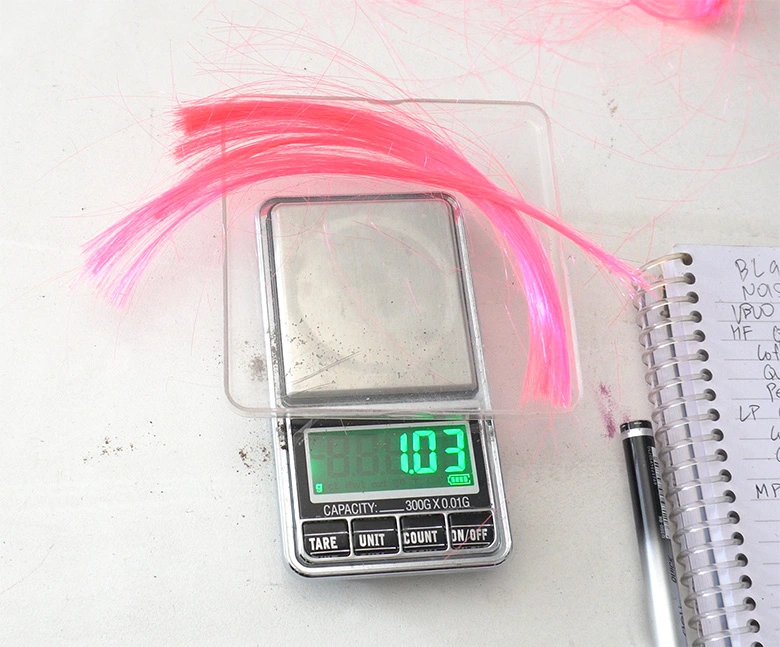
Hair weighed on the mini scale before the test
To simulate real-world conditions, I use multiple hair lengths:
- 5-inch strands
- 7-inch strands
- 9-inch strands
- 11-inch strands
- 12-inch strands
Each test uses at least 1 gram of hair per length, sometimes more, depending on the scenario.
The hair is spread evenly across the test surface before the vacuum is run over the area multiple times.
🧹 Test Surfaces

Each vacuum is tested on:
- Hard floors – to evaluate surface pickup and bin transfer
- Mid-pile carpet – to evaluate deep pickup and hair entanglement
👉 Carpet testing is especially important because fibers trap hair beneath the surface.
⚙️ Testing Process
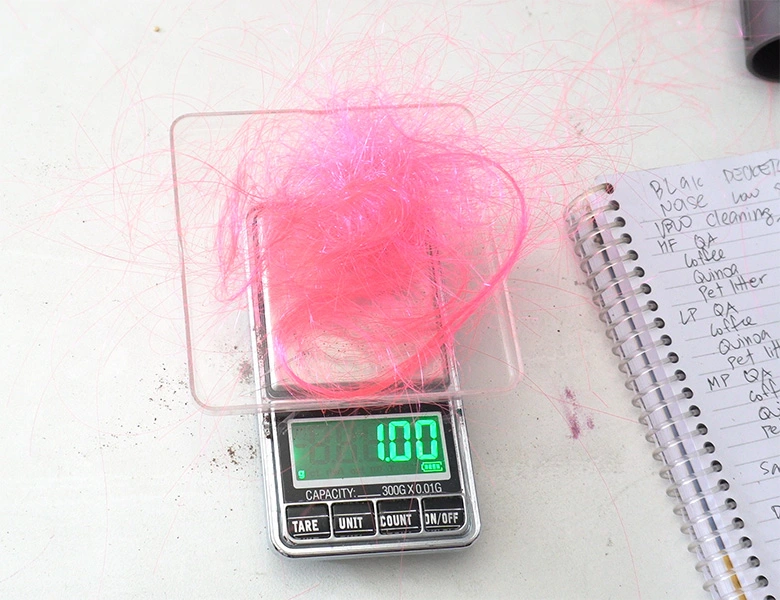
Weighing hair collected from the dustbin after the test.
- Hair is weighed before the test
- Hair is evenly distributed across the surface
- The vacuum is run over the test area until all visible hair is collected
- Hair is removed from the dustbin and weighed
- Results are calculated as a percentage of total pickup
Each test is repeated and averaged for consistency.
📊 Scoring Method
The final score is based on the average pickup across all hair lengths tested.
👉 Note:
Not all vacuums are tested at every length.
Some models are excluded from longer hair tests if they already struggle with shorter strands.
🔄 What Makes This Test Different
Most reviews only test short pet hair—or rely on visual observations.
This test goes further by:
- Using long hair strands (up to 12 inches)
- Measuring actual pickup using weight
- Evaluating hair wrap—not just pickup
- Testing across multiple surfaces
👉 This provides a more complete picture of real-world performance.
🧠 What I’ve Learned From Testing
After running this test across multiple vacuums, a few patterns stand out:
1. Airflow Matters More Than Expected
Low-airflow models often struggle to move hair through the system—even with strong suction.
2. Brushroll Design Is Critical

Anti-tangle systems can make a huge difference.
- Some vacuums push hair directly into the bin
- Others wrap hair tightly around the brush or axles
3. Narrow Bins Cause Problems

Hair tends to stick to plastic surfaces and can clog tight dustbins.
👉 Wider bins with better airflow paths perform significantly better.
4. Carpet Exposes Weaknesses
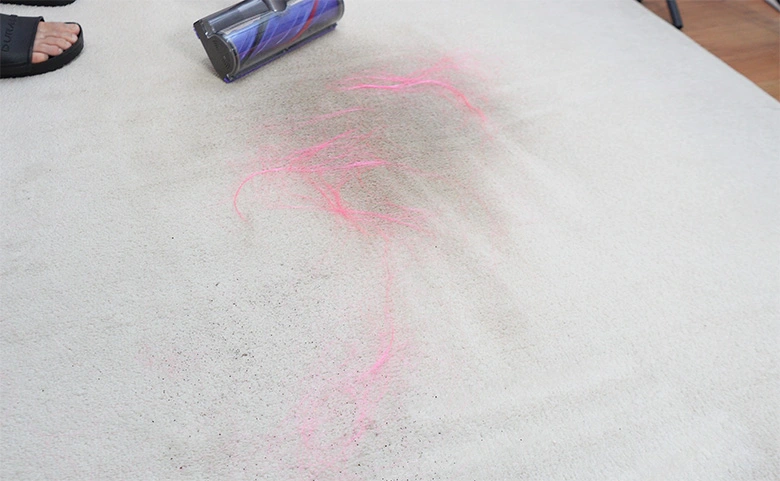
Many vacuums that perform well on hard floors struggle on carpet due to:
- Lower airflow
- Weak agitation
- Poor seal
⚠️ Common Failure Points
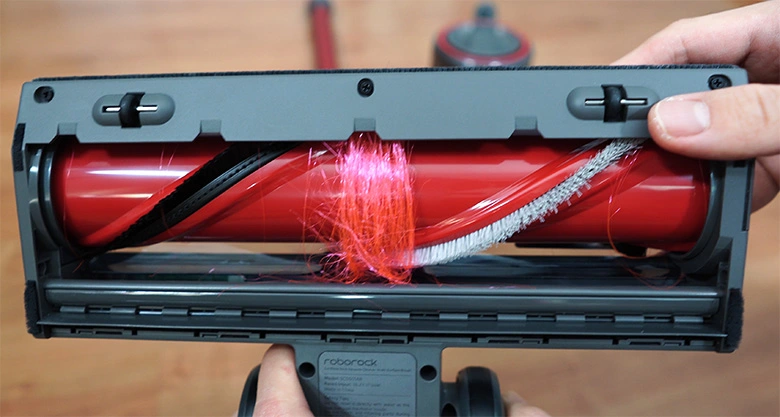
Based on testing, these are the most common issues:
- Hair wrapping around the brushroll
- Hair getting stuck in the nozzle or wand
- Partial pickup (hair lifted but not transferred to bin)
- Performance drops as the bin fills
🔗 Related Guides
To see how these results apply in real-world recommendations:
📌 Final Takeaway
Hair pickup isn’t just about power—it’s about how well the entire system works together.
👉 The best-performing vacuums combine:
- Strong airflow
- Effective brush design
- Efficient bin transfer
This test is designed to reveal those differences—so you can choose a vacuum that actually handles hair without frustration.