

How We Test Cordless Vacuums — CVG Testing Methodology

Why This Testing Process Exists
I didn’t set out to build a vacuum testing lab. I set out to buy a good vacuum.
Back in 2017, I was frustrated. Every review site I visited said the same things — “powerful suction,” “great on carpet,” “highly recommended.” Nobody showed any actual data. Nobody demonstrated what happened when you embedded sand into carpet fibers and tried to extract it.
Nobody checked whether a vacuum claiming HEPA filtration actually had a sealed system or just a HEPA-grade filter with leaky housing.
I started testing vacuums myself, initially just to answer my own questions. I photographed before-and-after debris shots. I measured airflow with an anemometer. I built a water lift test rig. Over time, these informal experiments became a repeatable framework — one I now apply to every cordless vacuum reviewed on this site.
The goal has never changed: show you how each vacuum actually performs, not what its spec sheet claims.
Most of the testing happens in my home, on real floors, with real debris — the same floors you’re trying to clean. No controlled laboratory surfaces. No ideal conditions were engineered to make a vacuum look good.
Note on transparency: My earlier content (pre-2019) relied more on aggregated research and manufacturer data. As hands-on testing became central to the site, those older reviews have been updated or flagged. Every review published since 2020 is based on direct testing using the methods described on this page.
Testing Equipment
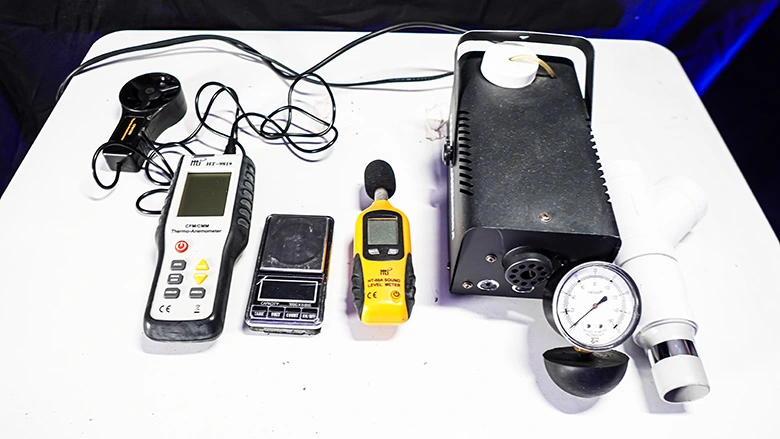
Every measurement on this site comes from one of the following tools, used consistently across all models so results are directly comparable.
| Tool | What it measures | Notes |
|---|---|---|
| Digital anemometer | Airflow (CFM) at wand and nozzle | Same unit, same placement for all vacuums |
| Water lift gauge + Y-gauge | Suction (inches of water lift) | Y-gauge tests unsealed working suction |
| Digital decibel meter | Noise (dB) | Measured at 1 meter during operation |
| Digital kitchen scale | Debris weight before/after tests | Accurate to 0.1g — calculates pickup % |
| Fog machine | Filtration seal verification | Reveals leaks visual inspection would miss |
A note on my rig: These tools are not lab-certified equipment. However, I use the exact same setup for every vacuum I test, so the results are consistently comparable across models—even if the absolute numbers differ slightly from those of a certified lab. The goal is a reliable ranking system, not ISO certification.
The CVG Testing Framework
Every vacuum is evaluated across six categories. The framework is designed so that each category answers a specific question a real buyer would ask.
| Category | Core question answered |
|---|---|
| Power (airflow + suction) | How strong is the motor, really? |
| Cleaning performance | Will it actually clean my floors? |
| Filtration | Does it trap fine dust or just move it around? |
| Battery runtime | How long will it actually run in my home? |
| Usability | Is it comfortable and practical to use daily? |
| Durability | Will it hold up over time? |
1. Power Testing
Airflow (CFM)
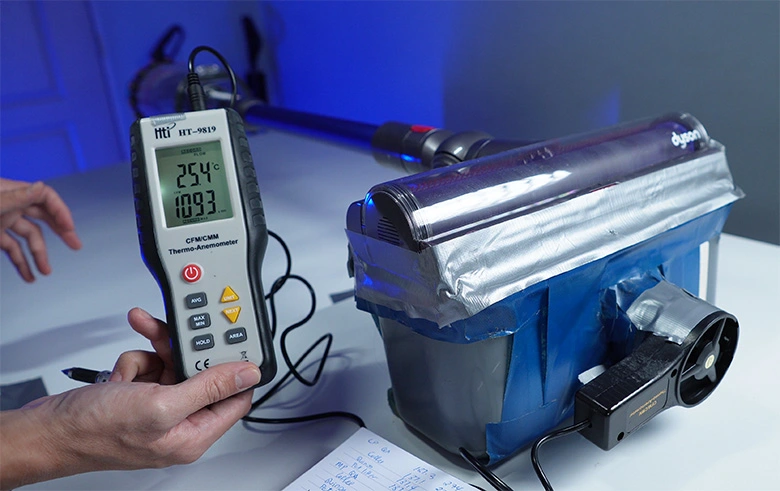
Airflow is the single most predictive metric for real-world cleaning performance, especially on carpet. It determines how efficiently debris moves through the cleaning head and into the dustbin.
How I measure it: I use a digital anemometer positioned at two points — at the wand (upstream) and at the cleaning nozzle (downstream). Both readings matter: the wand reading reflects motor power, and the nozzle reading reflects how efficiently the cleaning head channels that power into actual pickup.
What a good result looks like: Premium cordless vacuums typically measure 60–75 CFM at the wand. Budget models often fall below 40 CFM, which directly
limits carpet performance.
Suction (Water Lift)
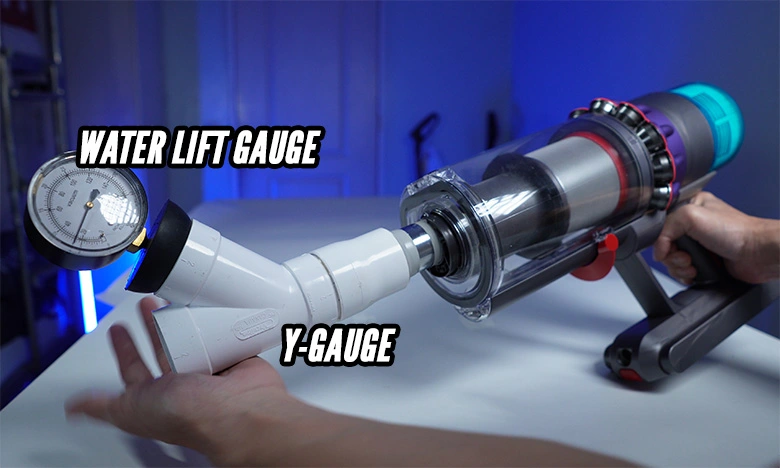
Suction measures raw pulling force — how hard the vacuum can grip debris. It matters most for embedded dirt and pet hair on carpet.
How I measure it: I use a water-lift gauge paired with a Y-gauge (the same diagnostic tool that central vacuum technicians use to identify blockages). I take three readings:
- Sealed: maximum potential suction with no airflow
- Unsealed via Y-gauge: working suction under real operating conditions
- Direct from gauge: motor baseline [least useful]
The unsealed Y-gauge reading is the most useful figure because it represents the suction available when the vacuum is actually cleaning — not a theoretical maximum.
I measure airflow (CFM) and suction (water lift) independently for each vacuum using an anemometer and a water-lift gauge. These measurements, combined with cleaning performance data, reveal which metric actually predicts real-world results. See my complete airflow vs suction guide for the full explanation and comparison data.
2. Cleaning Performance Tests
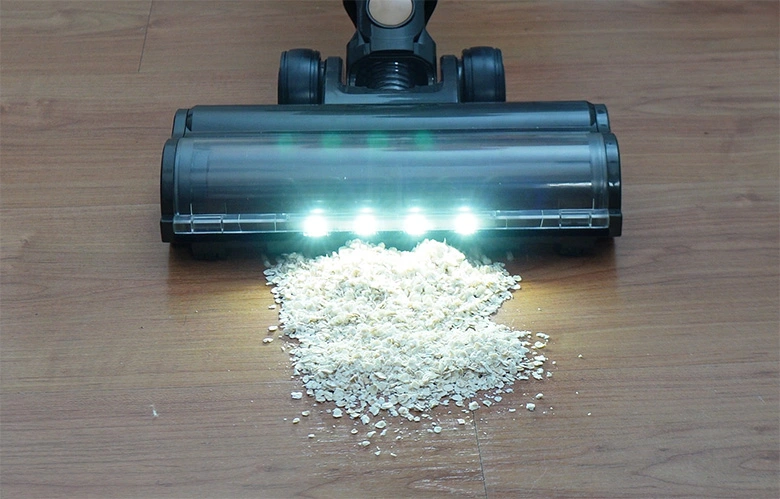
Hard Floor Debris Pickup
Setup: 50 grams each of sand, oats, coffee grounds, and quinoa are measured and placed in a defined test area on a hardwood surface.
Method: I vacuum the area with a single back-and-forth pass in each mode tested, weigh the remaining debris, and calculate the pickup percentage.
Scoring:
| Score | Pickup % | What it means |
|---|---|---|
| Excellent | 98–100% | Near-perfect; essentially all debris collected |
| Good | 92–97% | Strong performance; minor scatter only |
| Average | 80–91% | Acceptable; visible debris left behind |
| Poor | Below 80% | Significant debris remains; not recommended |
Carpet Surface Pickup
The same debris types are tested on low-pile and medium-pile carpet using the same weight and pass protocol. This test reveals which vacuums struggle even with debris sitting on top of carpet fibers.
Carpet Deep Cleaning (Embedded Dirt)
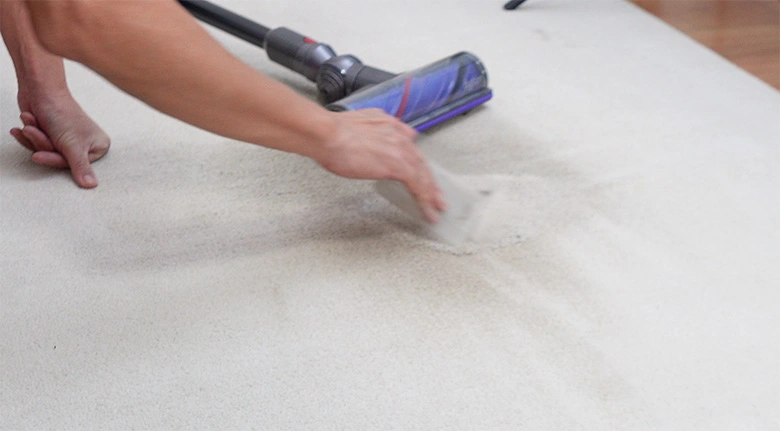
This is the most important test for anyone with carpet.
Setup: I measure 100 grams of fine sand and rub it firmly into medium-pile carpet fibers by hand, ensuring it is embedded below the surface layer — not just sitting on top.
Method: Three vacuum passes in the test mode, then I weigh the remaining sand. Any vacuum that can’t extract embedded sand will leave real household dirt (tracked-in grit, fine dust) behind, regardless of how well it handles surface debris.
Why this matters: In my testing, the gap between strong and weak performers on this test is enormous. The best cordless vacuums reach 100% even in their mid-power setting. Budget models often fall below 70%.
Hair Pickup and Wrap Test
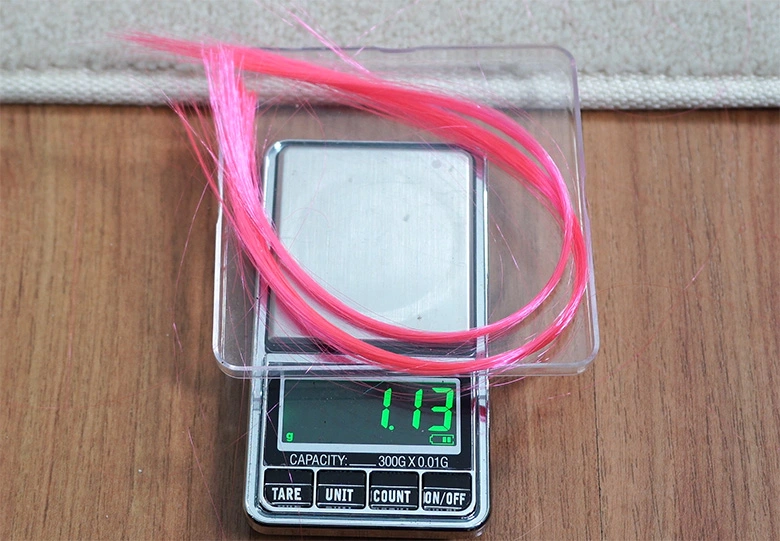
I use human hair cut to five specific lengths: 5, 7, 9, 11, and 12 inches. Each length is tested separately on both hard floors and carpet.
For each test, I measure:
- Pickup percentage (how much hair was collected)
- Wrap severity (how much tangled around the brushroll)
- Bin transfer (how efficiently hair moved into the dustbin)
- Hair wrapping is noted qualitatively and photographed. Heavy wrapping on 9-inch or shorter strands is flagged as a significant usability issue.
3. Filtration Testing (Fog Test)

Many vacuums claim HEPA filtration. Not all of them have a properly sealed system — meaning fine dust can escape through gaps in the housing even if the filter itself is HEPA-rated.
Method: I run a fog machine and fill the dustbin area with visible vapor, then operate the vacuum and observe the housing for leaks. Any visible fog escaping from seams, joints, or the filter area indicates the system is not truly sealed.
What this reveals: A vacuum with a leaking sealed system will re-emit fine particles — the exact allergens and dust that buyers with asthma or allergies are trying to remove from their air.
Result: Pass (no visible leakage) or Fail (visible leakage noted with photo). Most premium vacuums pass. Some mid-range models do not.
4. Battery Runtime Testing
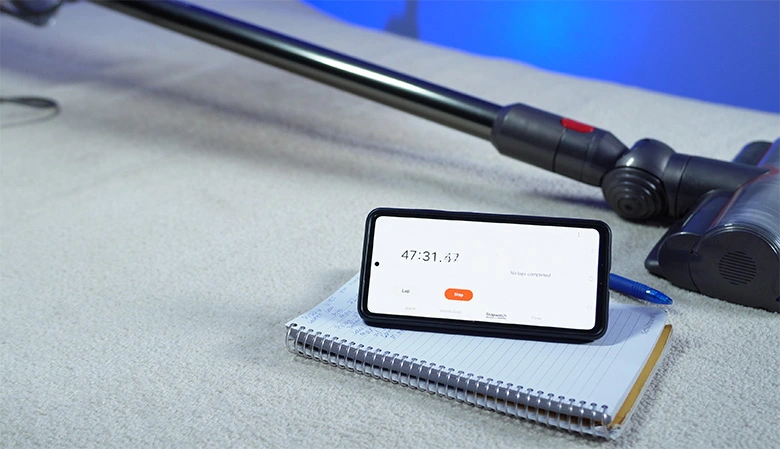
Manufacturer runtime claims are typically measured using the least-powerful attachment in the lowest-power mode — conditions that don’t reflect real-world cleaning use.
My method: I run each vacuum from a full charge to automatic shutoff using the main floor cleaning head on real flooring — the same attachment and surface type you’d use for everyday cleaning. I time each mode separately where relevant.
Why the main head matters: The cleaning head motor draws more current, significantly reducing runtime compared to handheld use. A vacuum rated for “60 minutes” may deliver only 40 minutes when vacuuming floors.
Results are reported as actual measured runtime in minutes for each power mode on the specific attachment used.
5. Usability and Maintenance
Ergonomics
Comfort cannot be captured in a spec sheet. I assess:
- Weight in handheld vs floor vacuum configuration (balance matters as much as total weight)
- Steering resistance — how easily the head pivots on tight turns
- Trigger fatigue — whether a trigger-style switch becomes tiring over extended use
- Attachment swap ease — how quickly tools can be changed mid-clean
Noise
Measured with a decibel meter at 1 meter during operation in each power mode. Results are reported in dB for each setting.
Readings above 80 dB are noted as loud; readings below 70 dB are notably quiet for a cordless vacuum.
Maintenance
I assess how long each maintenance task takes in practice:
- Dustbin emptying: how clean does it empty, how much dust escapes?
- Filter cleaning: how accessible are the filters, how long does it take?
- Brushroll hair removal: how difficult is hair removal after heavy use?
6. Durability and Long-Term Use
Most review sites test a vacuum for a week and publish. I keep test units and continue noting performance changes over months of use.
Long-term observations I record:
- Battery capacity degradation (measured runtime at 6-month intervals where possible)
- Brushroll wear
- Component reliability (clip failures, attachments loosening, seal degradation)
- Suction loss over time
Where I have long-term data, it is noted in the review. Where I do not yet have it, I note the testing timeframe clearly so you know how much time the review covers.
Worked Example: Dyson V15 Detect
To show exactly what these tests look like in practice, here are the complete results from my Dyson V15 Detect testing — one of the most tested vacuums on this site.
Power
| Test | Result |
|---|---|
| Airflow at wand | 73 CFM |
| Airflow at nozzle | 69 CFM |
| Suction (sealed) | 65 inches water lift |
| Suction (unsealed Y-gauge) | ~22 inches water lift |
Cleaning Performance
| Test | Surface | Mode | Result |
|---|---|---|---|
| Sand pickup | Hard floor | Auto | 99.8% |
| Oats pickup | Hard floor | Auto | 100% |
| Coffee grounds | Hard floor | Auto | 99.4% (soft roller scatters slightly) |
| Surface debris | Low-pile carpet | Auto | 100% |
| Surface debris | Medium-pile carpet | Auto | 100% |
| Embedded sand | Medium-pile carpet | Auto | 100% |
| Hair — 5 inch | Hard floor | Auto | 100% |
| Hair — 7 inch | Hard floor | Auto | 100% |
| Hair — 9 inch | Hard floor | Auto | 100% |
| Hair — 11 inch | Hard floor | Auto | 99% |
| Hair — 12 inch | Hard floor | Auto | ~98% (minor axle wrapping) |
Other Measurements
| Test | Result |
|---|---|
| Filtration (fog test) | Pass |
| Runtime — low mode (slim roller) | 84 min 19 sec |
| Runtime — auto mode (torque drive) | 40+ minutes |
| Noise — max mode | 80.8 dB |
| Noise — auto mode | ~73 dB |
What these numbers mean in context: The V15’s 73 CFM airflow is the highest I’ve recorded among Dyson cordless models — approximately 9% higher than the V11 Outsize and 20% higher than the V10 Absolute.
The 100% embedded carpet result in Auto mode (not Max) is notable because using max power unnecessarily shortens motor lifespan.
How Test Results Become a Recommendation
No single score determines a recommendation. I weigh results against:
- Use case fit — a vacuum that scores 100% on carpet deep cleaning but struggles on hard floors is recommended for carpet-heavy homes, not mixed-floor homes
- Price-to-performance ratio — a vacuum scoring 95% at $250 may be a better recommendation than one scoring 100% at $750 for most buyers
- Practical usability — a technically strong vacuum with poor hair wrap management is a poor recommendation for pet owners
- Long-term reliability signals — where I have them
Final recommendations are always framed by use case, not as a universal “best.”
Frequently Asked Questions
Do brands send you free products?
Some do. When a product is provided for review, this is disclosed in the review. Products received for review undergo the same testing process as purchased units — there is no “review copy” protocol that skips tests.
Do you purchase any vacuums yourself?
Yes. Many of the vacuums reviewed on this site were purchased at retail price. Purchased units are also disclosed in reviews.
How often are reviews updated?
Reviews are updated when I have new test data, when a significant firmware or hardware change is made to a product, or when new comparable models change the recommendation context. The “Updated” date on each review reflects substantive content changes, not minor edits.
Do you test budget and premium vacuums using the same methods?
Yes. The testing framework is identical regardless of price. This is intentional — it is the only way to produce meaningful comparisons across price tiers.
Why don’t you test uprights or canister vacuums?
This site focuses exclusively on cordless stick vacuums. The testing framework is built around that category. Expanding into other vacuum types would dilute the topical focus that makes comparisons meaningful.
See the Tests in Action
Every major test documented on this page is also filmed. You can watch the testing process — debris measurements, before-and-after shots, fog tests — on the Cordless Vacuum Guide YouTube channel.
Seeing the tests on video answers the question that no written methodology page can: is this real?
Where to Go Next
Now that you understand how results are generated:
- Best Cordless Vacuums — top picks across all categories
- Best for Carpet — strongest embedded-dirt performers
- Best for Hardwood Floors — optimized for hard floor performance
- Best for Pet Hair — lowest wrap scores and strongest hair pickup
- Full Review Process — step-by-step technical breakdown of each test procedure
Testing methods are updated as better measurement approaches are identified. This page reflects the current methodology as of April 2026.