

This page explains exactly how Cordless Vacuum Guide operates — what I will and won’t do, how reviews are produced, how conflicts of interest are managed, and why you can trust the data on this site.
If you want to understand the technical testing process (equipment, debris amounts, measurement methods), that lives on the Testing Methodology Hub.
This page covers the editorial side: independence, funding, and the standards that govern every piece of content published here.
Independence Policy
Every review on this site is produced without brand involvement in the outcome. That means:
- Brands do not see review drafts before publication
- Brands cannot request changes to published conclusions
- No payment is accepted in exchange for favorable coverage or ranking placement
- If a product fails a test, the result is published regardless of its price or brand reputation
This isn’t a policy that bends depending on which brand reaches out. It’s a structural decision made when this site launched in 2013 and it has not changed.
How Products Are Acquired
There are two ways a vacuum ends up on this site:
- Independently purchased. The majority of vacuums reviewed here are bought with my own money — from Amazon, Home Depot, Best Buy, or direct from the brand. There is no obligation to be kind about a product I paid for myself.
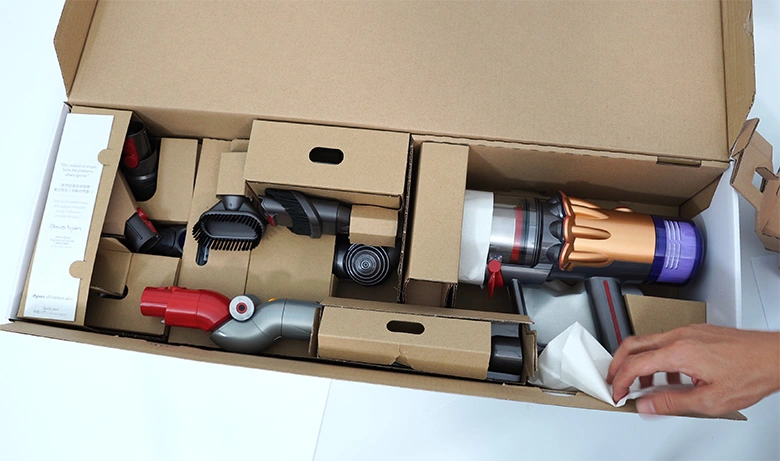
- Sent by a brand for review. Occasionally, a brand will send a unit. When this happens, it is disclosed clearly in the review. The testing process is identical — the same framework, the same debris, the same equipment. A free unit does not buy a favorable review.
If a vacuum was provided by a brand, the review will say so, clearly, near the top.
Conflict of Interest Policy
| What I do | What I don’t do |
|---|---|
| Test every vacuum using the same framework regardless of brand | Accept payment for positive coverage or preferred ranking |
| Publish test failures clearly — even on popular or expensive models | Change conclusions based on brand feedback after publication |
| Disclose affiliate relationships on every page that contains affiliate links | Recommend a product just because it has a high affiliate commission rate |
| Update reviews when long-term use reveals new information | Accept sponsored posts or paid “editorial” placements |
| Recommend cheaper models when they outperform pricier ones in testing | Let press sample obligations influence what gets written |
How This Site Makes Money — And Why It Doesn’t Affect Reviews
Cordless Vacuum Guide earns revenue through two sources:
- Display advertising (via Mediavine). Ads are served automatically based on your browsing context. I have no control over which specific ads appear, and no advertiser can influence content.
- Affiliate commissions (primarily Amazon Associates). If you click a link to a product and buy it, I may earn a small commission at no extra cost to you. This is disclosed on every page that contains affiliate links.
The affiliate model creates an obvious potential conflict: the more products I recommend, the more I earn. Here’s why that doesn’t change what gets recommended:
The commission rate on Amazon is the same (or nearly the same) across competing vacuum brands. A Dyson recommendation earns approximately the same percentage as a Shark recommendation. There is no financial incentive to favor one brand over another — only a reputational one to recommend whichever vacuum actually performs better in testing.
How a Review Verdict Is Reached
This is the section most editorial pages skip. It’s also the most important one — because collecting test data is only half the job. The editorial judgment is what turns numbers into a recommendation.
Here’s how a final verdict is formed:
- All six test categories are completed (power, cleaning performance, filtration, runtime, usability, durability). No shortcuts.
- Results are compared against every other vacuum tested in the same price bracket. A $300 vacuum is judged against other $300 vacuums — not against a $600 flagship.
- Weaknesses are weighted by use case. Poor hair pickup matters more for a pet owner than someone in a pet-free home. If a vacuum has a glaring weakness, the verdict reflects which type of buyer it would affect most.
- A vacuum can score well on paper but still not be recommended if it has a critical real-world failure — a defective dustbin latch, excessive noise, or a proprietary battery that’s hard to replace. These judgment calls are explained in the review.
- The verdict is written before checking affiliate commission rates. The recommendation comes from the data, not from what pays the most.
If two vacuums test nearly identically, the one with better long-term reliability record, wider availability of replacement parts, and lower price wins.
Review Update Policy
Vacuum performance changes over time. Batteries degrade. Seals wear. Firmware updates can alter performance. That’s why reviews on this site are treated as living documents, not one-time snapshots.
Reviews are updated when:
- Long-term testing reveals new findings not apparent at launch
- A significant firmware or hardware revision changes performance
- Consistent reader feedback identifies an issue that testing didn’t surface
- A product is discontinued or a better alternative in the same price range becomes available
Every review shows its last-updated date at the top of the page. If the update was substantial, a brief note in the review explains what changed and why.
Reader Feedback & Long-Term Reliability Reports
One of the limitations of any single reviewer is sample size. I test each vacuum individually, which means I might get a unit that performs above or below average for that model.
Reader feedback helps correct for this. When a pattern emerges — multiple readers reporting the same battery issue, brush roll problem, or build failure — that information feeds back into the review.
If you own a vacuum reviewed on this site and have a reliability observation worth sharing — especially from extended use — reach out via the contact form. I read and respond to every message personally.
Track Record
Publishing claims about independence is easy. The evidence is in the work done over time.
| Year | Milestone |
|---|---|
| 2013 | Launched Cordless Vacuum Guide blog |
| 2017 | Launched YouTube channel — first vacuum video reviews published |
| 2018 | Developed first airflow testing protocol using a calibrated anemometer |
| 2019 | Expanded testing scope to cordless stick vacuums as a primary category |
| 2020 | Introduced deep-cleaning carpet test using 100g embedded sand methodology |
| 2021 | Added fog/filtration test to every review — verifying sealed HEPA systems |
| 2022 | Expanded YouTube to include full video versions of testing experiments |
| 2023 | Joined Amazon Influencer program — video reviews published directly on product pages |
| 2024 | Expanded hair pickup testing to five strand lengths (5″–12″) across two surfaces |
| 2025 | Surpassed 30 cordless vacuums tested, 500+ hours of documented lab time |
| 2026 | Introduced bar chart data visualizations to all major reviews for easier comparison |
What to Do Next
Now that you understand how this site operates, here are the best starting points:
- Testing Methodology Hub — how every vacuum is physically tested (equipment, debris, methods)
- Full Review Process — the step-by-step breakdown of how a review is built from first test to published verdict
- About Garrick Dee — background on the person doing the testing
- Best Cordless Vacuums — start here if you’re ready to find the right vacuum for your home
Questions about a specific review, a test result, or a long-term reliability issue? Contact me directly — I read every message.