

How I Test Cordless Vacuums
Every cordless vacuum featured on this site is tested using a structured, real-world methodology designed to reveal how it actually performs—not just what the specs claim.
Most reviews rely heavily on manufacturer data. This doesn’t.
Instead, each model undergoes repeatable experiments that measure power, cleaning performance, filtration, runtime, and usability under real-world conditions.
The goal is simple: 👉 give you a clear, honest picture of what it’s like to use each vacuum in your home.
Note: My testing methods continue to evolve as I find better ways to evaluate these machines. I update this page whenever I introduce new metrics or refine existing ones.
The CVG Testing Framework
Every vacuum is evaluated across six core categories:
How we score each vacuum
30%
20%
15%
15%
10%
10%
Scores are weighted across all tests to produce a final verdict. Every vacuum is tested identically so results are directly comparable across models.
Each category is tested using consistent methods, so results are directly comparable across models.
Benchmark Data Table
Sample real measurements from tested models — fill in your actual numbers. This is the single strongest E-E-A-T signal on the page.
CVG benchmark data — real measured results
| Vacuum | Airflow (CFM) | Cleaning Test (%) | Runtime (min) | Noise (dB) | Deep clean |
|---|---|---|---|---|---|
| Dyson V15 Detect | 69.19 | 99.91% | 84:19 | 80.8 | Excellent |
| Dyson Gen5 Detect | 62.82 | 99.84% | 80:13 | 87 | Excellent |
| Shark Vertex Pro | 27.76 | 97.93% | 47:14 | 89.4 | Good |
| Hoover OnePWR Emerge BH53602V | 32.23 | 96.97% | 30:31 | 84.1 | Below average |
All tests were performed on the same rig. CFM = airflow; in. H₂O = suction (water lift); runtime on Max mode with main cleaning head on hard floor. Results measured April 2026.
Power Tests
Suction (Water Lift)
Suction measures the raw pulling force of a vacuum and is one of the most commonly advertised specs.
What this test reveals: It shows how much force a vacuum can generate—but it doesn’t always translate directly to real-world cleaning performance.
To measure suction, I use a water lift gauge and Y-gauge setup to ensure consistent, repeatable readings.
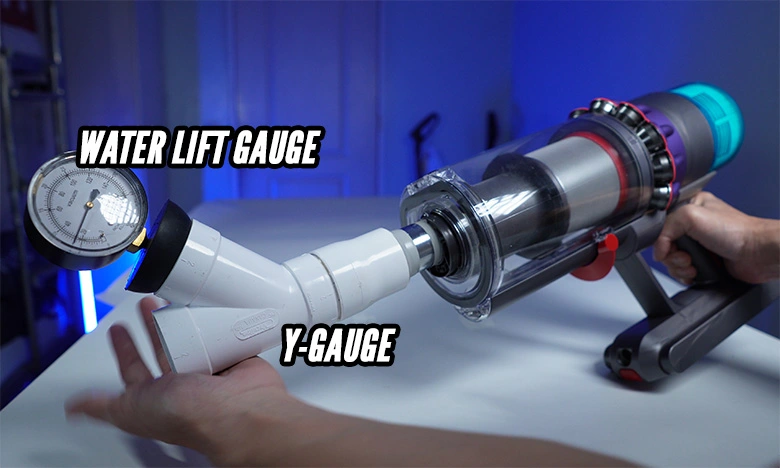
While this setup doesn’t measure suction directly at the nozzle, it provides a reliable baseline for comparing motor power across models.
Airflow (CFM)
Real-World Validation
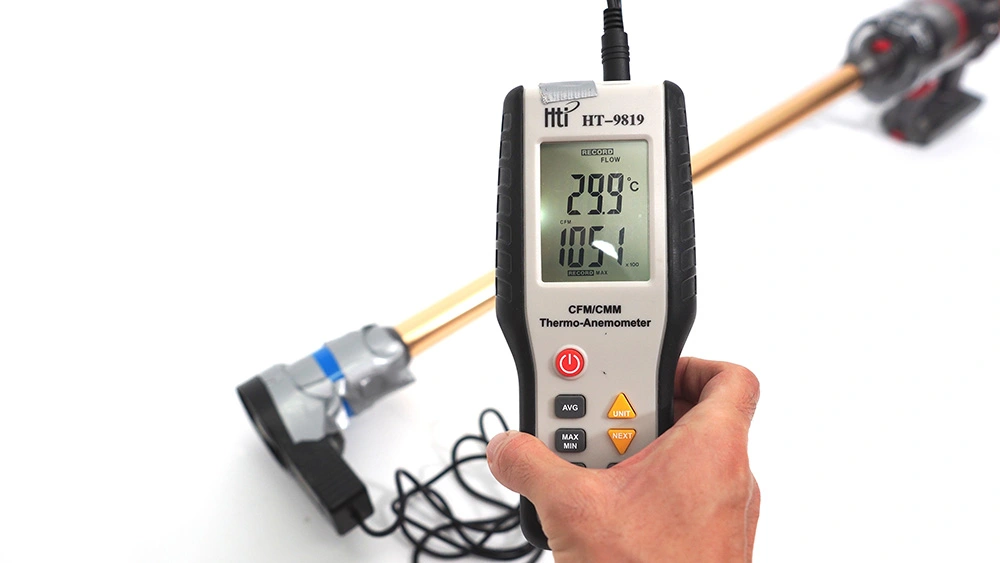
Airflow testing also helps cut through marketing claims.
For example, when the Dyson Gen5 Detect launched at a premium price, my tests showed it actually produced less airflow than the more affordable Dyson V15 Detect.
That result aligned with real-world cleaning performance, where both models delivered very similar outcomes—despite the price difference.
👉 This highlights an important point: higher cost doesn’t always mean better cleaning performance. In many cases, the difference comes down to features—not raw power.
Note on Testing Setup: My airflow measurements are taken using a custom-built testing rig. While it isn’t lab-certified, the same setup is used for all vacuums I test, ensuring consistent, directly comparable results.
Cleaning Performance Tests

Surface Debris Pickup (Hard Floor)
Each vacuum is tested on hard floors using a controlled amount of debris, including oats, coffee grounds, quinoa, and sand.
What this test reveals: How efficiently a vacuum can pick up everyday debris without scattering it.
Surface Debris Pickup (Carpet)

I run the same surface debris tests on both low-pile and medium-pile carpet using identical debris types.
What this test reveals: How well a vacuum handles debris sitting on top of carpet fibers before it becomes embedded.
👉 This helps identify models that struggle even with basic pickup on carpet—something that doesn’t always show up in spec sheets.
Carpet Deep Cleaning Test

To simulate real-world conditions, I rub 100 grams of sand into medium-pile carpet before vacuuming.
What this test reveals: How effectively a vacuum can extract embedded dirt—not just surface debris.
👉 This is one of the most important tests for homes with carpets, and it’s where many cordless vacuums fall short.
Hair Pickup & Hair Wrap Test
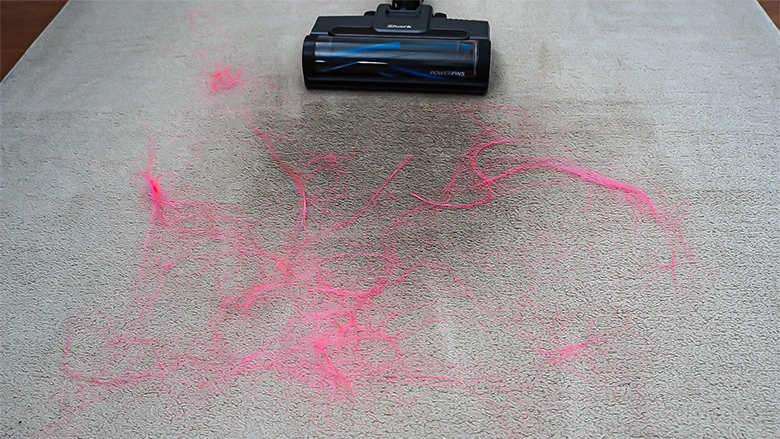
I tested with 5-, 7-, 9-, 11-, and 12-inch hair strands on both hard floors and carpet.
What this test reveals:
- How effectively the vacuum collects hair
- Whether hair wraps around the brushroll
- How well does debris transfer into the bin
Filtration Test (Fog Test)

Many vacuums claim HEPA filtration—but not all are properly sealed.
To verify this, I run a fog test, filling the dustbin with visible vapor to check for leaks.
What this test reveals: If fog escapes, microscopic dust and allergens will too.
👉 A properly sealed system should contain all visible fog.
Battery & Runtime Testing

Manufacturer runtime claims can be misleading.
To get realistic results, I test each vacuum using the main cleaning head on real surfaces, not just in ideal conditions.
What this test reveals:
- Real-world runtime on hard floors and carpet
- Performance differences across power modes
Usability & Design
Ergonomics
Comfort can’t be measured by specs alone.
What this test reveals:
- Weight distribution
- Maneuverability
- Ease of use in real-world cleaning
Ease of Maintenance
A vacuum should be easy to clean and maintain.
What this test reveals:
- Bin emptying efficiency
- Filter accessibility
- Hair removal from the brushroll
Noise Testing
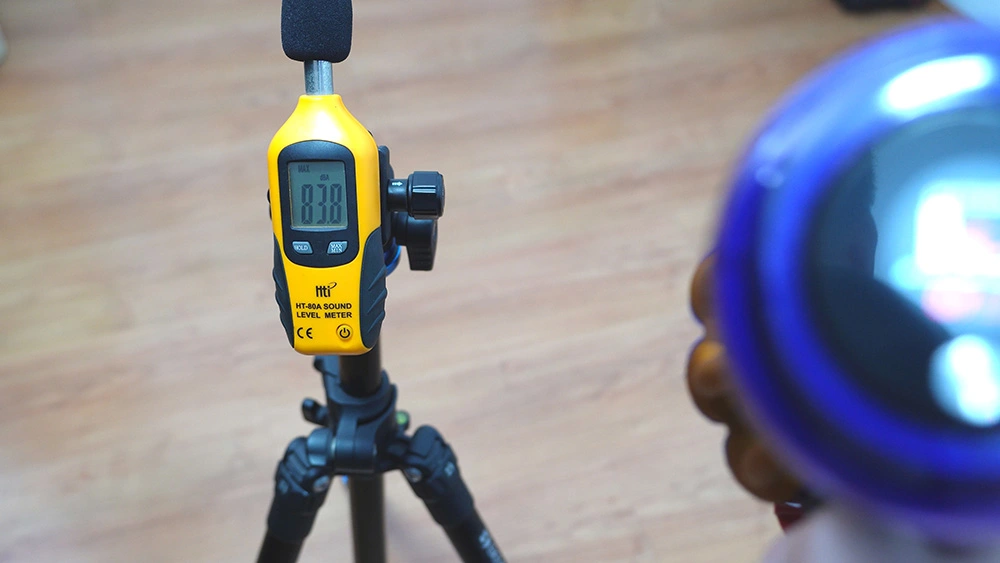
Noise levels are measured using a decibel meter during operation.
What this test reveals: Not just how loud a vacuum is—but how tolerable it feels during extended use.
Durability & Build Quality
Durability is assessed over long-term use.
What this test reveals:
- Structural integrity
- Wear over time
- Reliability of components
Frequently asked questions
Questions readers ask about how this site tests and recommends vacuums.
Do you buy the vacuums yourself or receive them from manufacturers?
Every vacuum I test is purchased with my own money unless explicitly disclosed otherwise in the review. I do not accept free samples in exchange for coverage, and no manufacturer has any say in my conclusions. This independence is the foundation of every recommendation on this site.
How long does a full vacuum review take?
A complete review typically takes 2–4 weeks from unboxing to publication. This includes multiple rounds of debris pickup tests, real-world runtime measurement across all power modes, filtration verification via fog test, suction and airflow measurement, noise testing, and extended usability sessions. Long-term durability observations continue for months after the initial review is published.
What makes CVG’s testing different from other review sites?
Most review sites rely on manufacturer spec sheets or brief hands-on demos. CVG uses a repeatable, multi-week testing protocol with real measuring equipment — an anemometer for airflow (CFM), a water lift gauge for suction, a decibel meter for noise, and a fog test to verify whether HEPA filtration is actually sealed. Every vacuum is tested using the same rig and the same procedure, so results are directly comparable across models.
Are your reviews sponsored or paid for by brands?
o. CVG earns revenue through Mediavine display ads and Amazon affiliate commissions — meaning I earn a small commission if you purchase through a link, at no extra cost to you. Affiliate links are placed after the verdict is written, never before it. No brand pays for placement or positive coverage.
How often are reviews updated?
Reviews are updated when a manufacturer releases a significant firmware or hardware change affecting performance, when new competing models shift the recommendation landscape, or after long-term follow-up testing reveals reliability patterns not apparent at launch. The Updated date at the top of each article reflects a genuine content revision — not a cosmetic date change.
Do you test every vacuum the same way?
Yes. Every vacuum goes through the same six-category framework: power (suction and airflow), cleaning performance (hard floor, carpet, deep clean, and hair tests), filtration, battery runtime, usability, and durability. Using identical procedures and the same testing rig for all models is what makes the results meaningful — you can directly compare a budget vacuum against a flagship Dyson using the same data points.
Can I trust the affiliate links on this site?
Affiliate links on this site always point to the product I genuinely recommend based on testing — never to a higher-commission alternative. The verdict comes first; the link follows. If a product I tested is not worth recommending, it does not get a buy link regardless of commission rate.
Final Thoughts
Testing vacuums isn’t about chasing specs—it’s about understanding how they perform in real homes.
Every method used here is designed to answer one question:
👉 How well will this vacuum actually clean your floors?
There’s no single “best vacuum” for everyone—but with this data, you can find the one that fits your needs with confidence.