

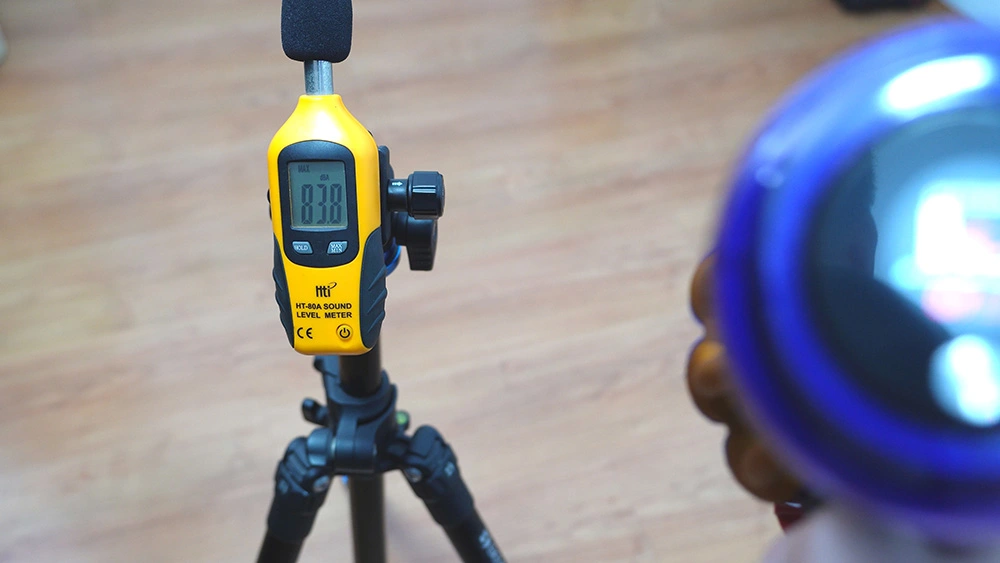
After testing dozens of cordless vacuums and measuring noise output in dB for each model, I can tell you something no other review site can: what’s normal loud for your specific vacuum — and what’s a warning sign. If your vacuum has crossed that threshold, here’s exactly what to do.
How to Tell Normal Loud from Abnormal Loud
Most vacuum reviews just say “it’s loud” — that’s useless. Through my noise testing methodology, I measure dB readings per model on both MAX and standard suction modes. Here’s what our data shows across tested models:
| Model | Normal operating dB (standard) | Max mode dB | Abnormal threshold |
|---|---|---|---|
| Dyson V15 Detect | 70.3 dB | 80.8 dB | >88 dB = investigate |
| Dyson V12 Detect Slim | 70.1 dB | 80.7 dB | >87 dB = investigate |
| Shark IZ462H | 76.3 dB | 80.8 dB | >86 dB = investigate |
| LG CordZero A9 Ultimate | ~72 dB | ~79.4 dB | >85 dB = investigate |
| [Your model not listed?] | See our full noise test methodology page → | ||
A good rule of thumb: if your vacuum sounds 6+ dB louder than its normal operating baseline, that’s a signal — not just background variance. Use a free dB meter app on your phone to check.
→ Read: our noise test methodology
5 Types of Abnormal Vacuum Noise — and What Each Means
Based on hands-on disassembly and testing, here’s how to decode what you’re hearing:
High-pitched whine
Motor bearing wear or a blockage near the motor inlet. Often gets worse at higher suction modes. Check the filter and pre-motor area first.
Rattling or clattering
Debris in the dustbin that wasn’t emptied, or a loose component (brush roll cover, dustbin latch). Usually the easiest fix — empty and inspect.
Grinding
Brushroll obstruction (hair wrap) or a damaged bearing in the brushroll itself. Remove the brush roll and check for wrapped hair or debris before anything else.
Rattling or clattering
Debris in the dustbin that wasn’t emptied, or a loose component (brush roll cover, dustbin latch).
Usually the easiest fix — empty and inspect.
Pulsing or surging sound
Battery or motor power delivery issue. Common in older battery packs. The motor isn’t receiving stable current, causing cyclical drops in suction and noise.
⚠ Burning smell with noise
Stop using the vacuum immediately. A burning smell combined with loud noise points to motor overheating, blocked airflow causing heat buildup, or a failing battery. Continued use risks damage or fire. See safety steps below.
Step-by-Step Diagnosis Flowchart
Work through these in order before concluding the vacuum needs repair or replacement:
1. Empty the dustbin and check for debris
A full dustbin restricts airflow and forces the motor to work harder. This is the most common cause of sudden noise increases.
2. Clean or replace the filter
A clogged filter starves the motor of airflow. Most cordless vacuums need filter cleaning every 1–3 months. Check your model’s spec — some are washable, some aren’t.
3. Remove and inspect the brush roll
Detach the brush roll head and manually spin the brush. Hair wrapped tightly around the bearings causes grinding. Use scissors to cut through the wrap.
4. Check all attachment connections
Loose wands, floor head clips, and dustbin seals can all rattle. Remove and reattach each component firmly.
5. Run in standard mode, not MAX
MAX mode runs the motor at full draw and is louder by design. If the noise only happens on MAX, that may be normal — cross-check with the dB table above.
6. Still loud? Test without attachments
Run the motor unit alone (no floor head). If the noise disappears, the issue is in the attachment. If it persists, the motor or battery is the source.
If you smell burning at any point during diagnosis: stop, unplug, and do not recharge the battery until the issue is identified. Battery-related heat events are rare but serious.
When Noise Means the Vacuum is Beyond Economical Repair
Not every fix is worth the cost. Here’s a simple framework from my testing experience:
- If a replacement motor costs more than 60% of a new unit’s price — replace the vacuum
- If the battery is swelling or getting hot during charge — replace the vacuum (safety issue)
- If the noise started after a hard impact (dropped), internal damage is likely — get a repair estimate first
- Models over 4–5 years old with bearing noise: parts are often discontinued; replacement makes more sense
Quieter Alternatives Worth Considering
If your vacuum has reached end-of-life or the repair isn’t worth it, these are models I’ve personally measured as among the quietest in their class during testing: