Latest Updates
This comparison is regularly updated with new testing data and performance insights.
🔄
:
Introduced bar graphs so you can quickly visualize performance differences between models.
🔄
:
Revamped the comparison cards layout to improve clarity and usability. Added structured tier classifications (entry-level, mid-range, premium, ultra-premium) to provide better context on performance and positioning—helping you make faster, more informed buying decisions.
Budget Tier
This tier is all about getting solid everyday cleaning performance at the lowest cost. If you have a smaller home, lighter cleaning needs, or just want the best value, this is where Tineco and Dyson compete most aggressively on price vs performance.
Swipe on mobile or scroll horizontally to see all picks.
⚡ Quick Verdict
👉 Choose the Dyson V7 if: You want a simple, reliable cordless vacuum for light cleaning tasks and smaller spaces, with better build quality than most budget alternatives.
👉 Choose the Dyson V8 if: You want the best all-around performance in the budget tier—with stronger suction, better cleaning on both hard floors and carpets, and a larger dustbin for longer cleaning sessions.
👉 Choose the Tineco A10 if: You want the most affordable and lightweight option for quick cleanups and hard floor use, without spending extra on features you may not need.
👉 Choose the Tineco A11 if: You want better value for the price with added convenience—like a removable battery and longer runtime—making it a more flexible option for everyday whole-home cleaning.
Bottom line:
The Dyson V8 stands out as the best overall performer in this tier, while the V7 is a solid entry-level pick. Tineco’s A10 is the most budget-friendly option, and the A11 offers the best value with added flexibility—so your choice comes down to performance vs price and convenience.
Mid-Range Tier
This is the sweet spot for most buyers, where performance, features, and price start to balance out. Here, the difference between Dyson’s raw cleaning power and Tineco’s smart features becomes much more noticeable.
Swipe on mobile or scroll horizontally to see all picks.
⚡ Quick Verdict
👉 Choose the Dyson V10 if: you want a lighter, more affordable mid-range Dyson that still delivers strong all-around cleaning performance on both hard floors and carpets without the added cost of newer features.
👉 Choose the Dyson V11 if: you want stronger suction, longer runtime, and more consistent deep-cleaning performance—especially for carpets and larger homes.
👉 Choose the Tineco Pure One S12 if: you want smarter features like automatic suction adjustment, app connectivity, and better overall value for the price, with solid performance for everyday cleaning.
Bottom line:
The Dyson V11 delivers the best overall performance in this tier, with stronger suction and more consistent deep cleaning—but the Tineco Pure One S12 offers the best balance of features and value. The Dyson V10 sits in between as a simpler, more affordable option that still gets the job done well.
Premium Tier
In this tier, you’re stepping into top-tier performance and advanced cleaning technology. These models are built for deeper cleaning, larger homes, and more demanding use—where small differences in power and efficiency really matter.
Swipe on mobile or scroll horizontally to see all picks.
⚡ Quick Verdict
👉 Choose the Dyson V12 Detect if: you want a lightweight, easy-to-handle vacuum with excellent everyday cleaning performance—especially for hard floors—without sacrificing Dyson-level suction.
👉 Choose the Dyson V15 Detect if: you want stronger suction and better deep-cleaning performance for carpets, pet hair, and heavier debris in a more powerful all-around machine.
👉 Choose the Dyson V15S Submarine if: you want the versatility of vacuuming and mopping in one system, making it ideal for hard floor homes that need both dry debris pickup and wet cleaning.
Bottom line:
The Dyson V12 Detect is the best choice for lightweight everyday cleaning, the V15 Detect delivers the strongest overall performance, and the V15S Submarine adds unmatched versatility with its mopping capability—making it the most flexible option for hard floor-focused homes.
Ultra Premium Tier
This is where you get the best each brand has to offer, with no compromises. Whether it’s maximum power, larger capacity, or the latest technology, these models are designed for users who want the absolute best performance and convenience.
Swipe on mobile or scroll horizontally to see all picks.
⚡ Quick Verdict
👉 Choose the Dyson Gen5 Detect if: you want flagship-level performance in a more balanced, manageable design—delivering top-tier suction, excellent deep cleaning, and better handling for everyday use.
👉 Choose the Dyson Gen5 Outsize if: you want maximum coverage, longer runtime, and a larger dustbin for bigger homes—reducing interruptions during whole-home cleaning sessions.
Bottom line:
Both deliver the strongest cleaning performance Dyson offers, but the choice comes down to usability vs capacity—the Gen5 Detect is the better all-around flagship for most homes, while the Outsize is built for scale, making it ideal for larger spaces and longer cleaning sessions.
Watch Video Comparison
Introduction to Dyson and Tineco
Dyson is a household brand with a reputation for manufacturing high-quality vacuums. They’ve been around for decades, and I’m guessing they will be around for a few more.
Founded by James Dyson, this company is the pioneer of bagless vacuums and produces some of the most powerful cordless stick vacuums in the industry. Their primary focus now is cordless vacuums, and with the release of the V11 Outsize, they mean business.
Tineco doesn’t have that track record so far, but from what I’ve seen, they are pushing out high-quality products capable of cleaning almost as well as a Dyson.
In some ways, Tineco is a competitor to Dyson. Their products incorporate features not found in Dyson or stuff they don’t want to include.
These include having a trigger lock, a removable battery, and more accessories than any Dyson cord-free product.
Similarities of Tineco and Dyson
In this section, I’ll summarize the similarities between the Tineco and Dyson stick vacuums.
1. Interchangeable tools
Tineco and Dyson utilize a removable tube and interchangeable attachments that provide it with a lot of flexibility regarding the areas it can clean.
The difference lies in the types and number of tools available, which Tineco consistently over-delivers.
2. Trigger
Both have a trigger mechanism that activates the motor. Dyson’s version is more responsive to the slightest pressure.

Tineco’s trigger isn’t as responsive, with a slight delay, but it features a trigger lock, so you don’t have to squeeze continually.

All Tineco stick vacuums have a trigger lock.
3. Primary nozzles
Dyson and Tineco offer soft-roller and standard-brush attachments for cleaning floors, depending on the model you choose.
However, Dyson’s version does not have an LED headlight, unlike Tineco.
4. HEPA filtration
All Dyson and Tineco stick vacuums feature fully sealed systems with a post-motor HEPA filter, which keeps fine dust particles inside the dust bin.
Differences between Tineco and Dyson
Now, let’s look at the differences between these two brands.
1. Steering
Dyson cordless vacuums possibly have the best steering of all the stick vacuums I’ve tested. Their products turn sharply and are very responsive. Twist the wrist, and it immediately turns.
Tineco’s steering isn’t as responsive and doesn’t turn as sharply. So it takes more turns to avoid obstacles.
2. Dust bin
One of my favorite features of Dyson is the hygienic system. All their cord-free products, starting with the V7, feature this downward debris-pushing mechanism.
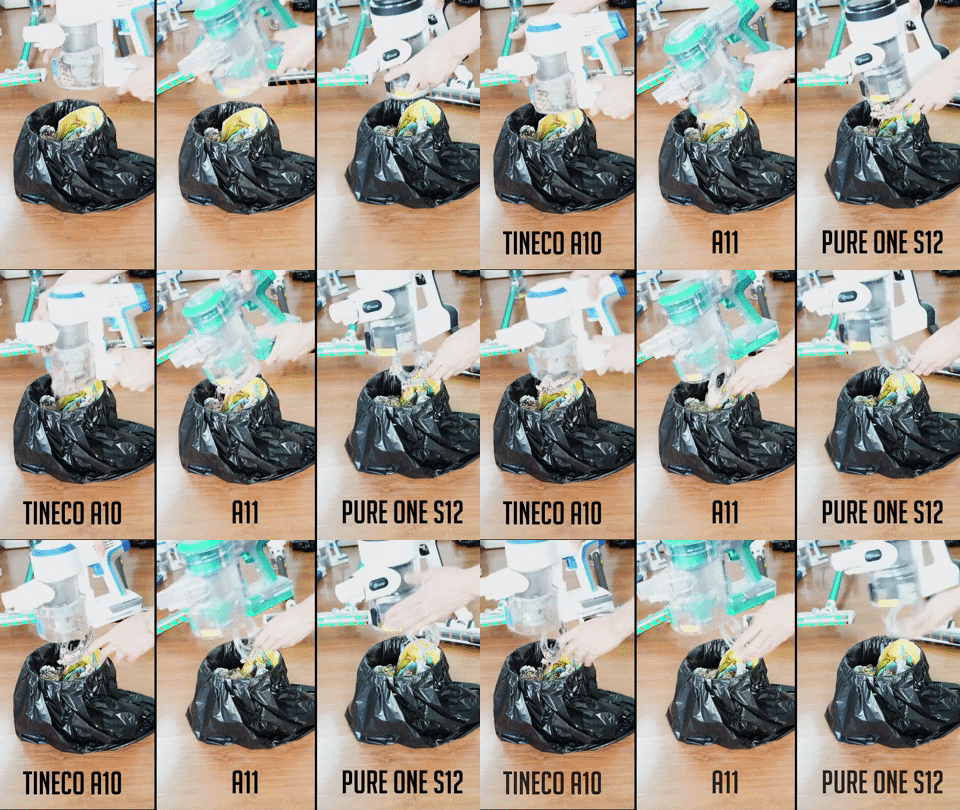
Tineco doesn’t have anything like it; it only has a release latch to open a trap door underneath, after which gravity takes over. It works most of the time, but statically charged stuff like hair tends to stick.
However, one advantage Tineco has over Dyson is the ease with which the cyclonic system can be removed. For Dyson vacuums, you’ll need special tools to remove this component.
3. Battery
All Tineco stick vacuums have a detachable battery that’s easy to remove. And if you purchase the A11 or the Pure One S12, you can charge two batteries simultaneously.
In comparison, Dyson cord-free products (except for some V11 and all V15 variants) have built-in batteries. It is possible to replace the batteries, but you’ll have to remove a few screws.
Please check my guide on replacing the Dyson V6 and V8 battery for more details.
4. Accessories and tools
Tineco over-delivers in this aspect. The A11 and S12 include more than ten attachments out of the box.
Dyson doesn’t have the diversity of tools that Tineco brings to the table. For example, the V8, V10, and V11 models come with three to four additional tools, in addition to the main cleaning heads.
5. Auto setting
These vacuums (at least the premium options Dyson V11 and Tineco S12) have sensors that automatically adjust suction, but each brand does it differently.
Tineco’s sensor is located near the dust bin and adjusts the airflow based on the quantity of dirt that passes through it. So, regardless of the surface, the motor will kick into a higher gear if you run over a dirty patch.
Dyson’s version is different. It increases power when it detects more resistance (e.g., carpet) and returns to a lower setting when it senses less.
Interface comparison
All Tineco and Dyson stick vacuums have similar interfaces, but there are differences.
These vacuums all have triggers that activate the motor. Tineco’s version features a trigger lock, whereas Dyson’s does not.
The A10 and A11 have a button on top to toggle between the default and max settings.

The Tineco A11, A10, Dyson V7, V8, and V10 interface side-by-side.
In contrast, the Dyson V7, V8, and V10 use a slide switch for the same purpose. Please note that the V10 and V11 have three power settings; the V6, V7, and V8 have two.
The Tineco Pure One S12 and Dyson V11 are different. Both have a screen for displaying information to users, such as runtime, power settings, and more.

The S12 has a slider to adjust power. It doesn’t have a fixed number of settings – only a range of options. I leave it at auto and let the iLoop sensor do the work to keep things simple.
The Dyson V11 Torque Drive features a button at the back that toggles between three settings: low, auto, and boost.
One quirk of Tineco is that it always starts at a low setting, even if you previously used a higher setting. Dyson doesn’t have the issue and starts at whatever power setting you used beforehand.
Power comparison
Here’s an overview of the power figures of Tineco and Dyson stick vacuums. For the sake of uniformity, I used an anemometer to measure the airflow from both the wand and the main nozzle.
Recognize that there’s a margin for error with this experiment, but it’s an excellent method for comparing power.
First, here are the results.
The Dyson V11 Torque Drive boasts the highest airflow of all the vacuums on the list, resulting in superior performance on carpets.
The V11 Outsize has even more power than the Torque Drive, but I haven’t tested it, so I didn’t include it here.
Tineco isn’t far behind. The S12 has 6.89% less airflow at the max setting than the V11 Torque Drive.
Moving down to the lower-level options, the Tineco A10 recorded a slightly higher score than the V7.
In comparison, the V8 is slightly more powerful than the A11 at the wand, but the A11 produces a little more airflow at the nozzle.
The difference in airflow is just minimal with the lower-end models.
How do Tineco and Dyson clean?
These stick vacuums are versatile machines capable of cleaning various areas, including carpet, hardwood, stairs, and upholstery.
Each variant you see here has interchangeable tools, making it usable as a stick and a handheld vacuum.
However, the primary function of these products is to clean floors. And it does it with two main tools – a soft roller (or fluffy) and a standard brush.
Here are the cleaning heads for each model.

The type of floor tool you’ll get will depend on the variant.
For instance, the V8 Absolute comes with both the Fluffy and Direct Drive attachments. Likewise, the Dyson V10 and V11 Absolute versions.
The A11 Hero comes with the standard brush only, while the Master+ includes both tools.
Cleaning Comparison
We’ll examine how each product performed in the cleaning tests.
First, here are the Dyson cleaning comparison results.
The Dyson V11 Outsize had the best overall scores at 100%, thanks to its wide nozzle and monster airflow.
However, the V15 Detect is the better option due to its lighter frame and high-end performance on carpet.
Surprisingly, the V7 performed better than the V11 at cleaning surface dirt from carpets, at least according to the test scores, though the difference is minimal.
Next, let’s look at the Tineco results.
The A11 had the best overall scores in the Tineco lineup, outperforming the more expensive Pure One S12.
This was due to consistently high scores across all its surface-cleaning tests, with the lowest score at 99.2%.
Surprisingly, Tineco does better than Dyson if you look at the surface debris scores. The results here are consistent with the airflow number.
Even the entry-level Tineco A10 outperformed the Dyson V7 across the board, particularly on hard surfaces.
Which is better on hard floors?
Even if the Tineco A10 and A11 results are higher than those of the Dyson V7 and V8, I won’t put much weight on them.
First, the difference is only minimal, and second, the Dyson Fluffy tool steers much better than the soft roller version of Tineco.
So whatever advantage Tineco has with pick-up is negated by this.
You can’t go wrong with either the Tineco or the Dyson when it comes to cleaning hard floors. Ensure you select a variant with the soft roller attachment.
Sand on hard floor comparison
Another area I tested these vacuums in is their ability to clean sand.
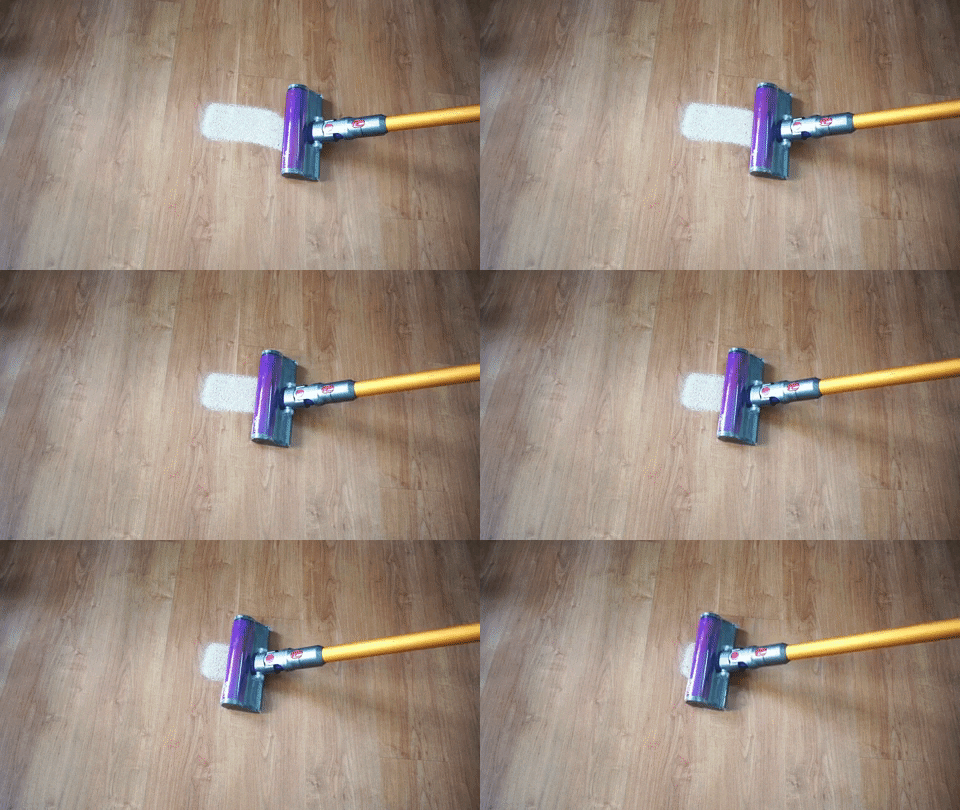
The V8 Fluffy tool is excellent at cleaning sand on hard floors.
Here are the results for all models.
Every vacuum in the list did exceptionally well, scoring in the high 90s. The V10 is the winner on the list and the only option with a perfect score of 100%.
Tineco vacuums have a cleaner pickup than Dyson vacuums when comparing the standard brush attachments.
And it provides a better cushion thanks to the rubber wheels versus the ball system of Dyson, which can scratch the surface if sand sticks on it.
If you frequently encounter sand, I recommend investing in a soft roller attachment for increased efficiency.
Edge cleaning comparison
Let’s look at how each vacuum compares in cleaning edges. So for this test, I scattered pet litter in the corner of my home office. It also features a quarter-inch crevice near the wall, making it a useful tool for crevice testing.

The Dyson V8 and V10 performed best in terms of factoring efficiency and the amount of dirt they collected.
These two options left the least amount of pet litter. One reason why these models did better than any of the Tineco vacuums is the wider roller.
Comparing the V8, V10, A10, A11, and S12 rollers, you can see the difference in why the Dyson is more proficient.
Carpet Comparison
Next, we’ll examine how each performed when cleaning carpets.
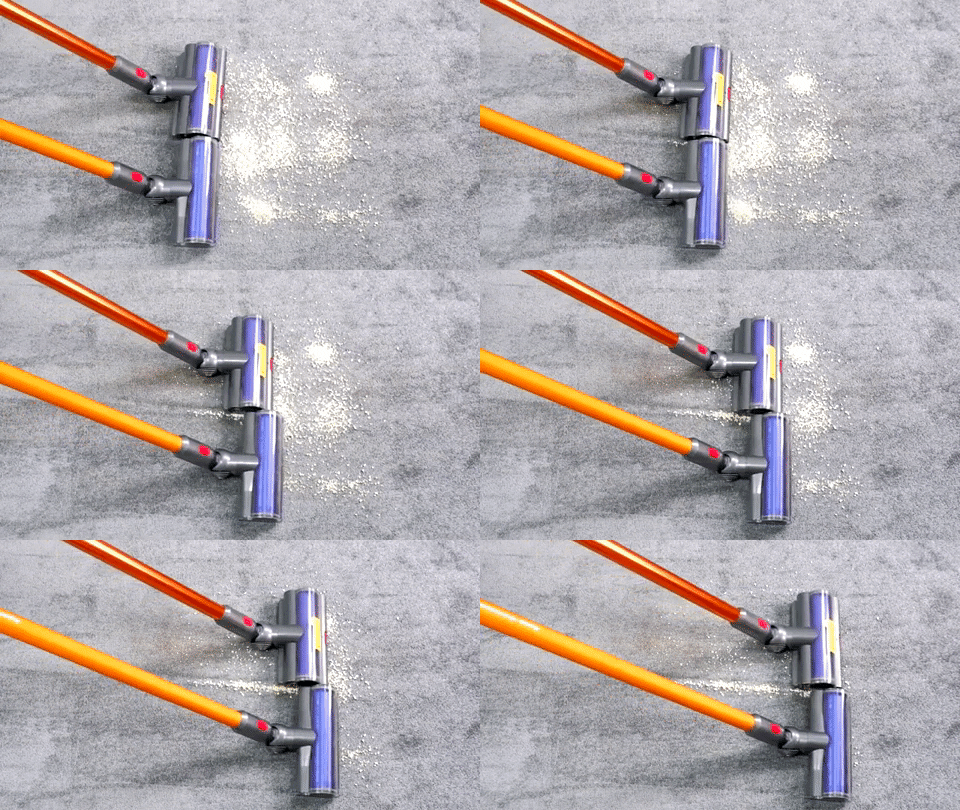
The Dyson V8 and V10 comparison on cleaning low pile carpets.
Here are the Dyson scores.
The V11 performed best in both surface and deep cleaning tests, as indicated by the scores above. It’s not surprising, as it has the highest airflow of all the options here.
And here’s the Tineco scores.
The A10 surprisingly outperformed the A11 and S12 with the surface tests, but the S12 was the best in the deep cleaning test.
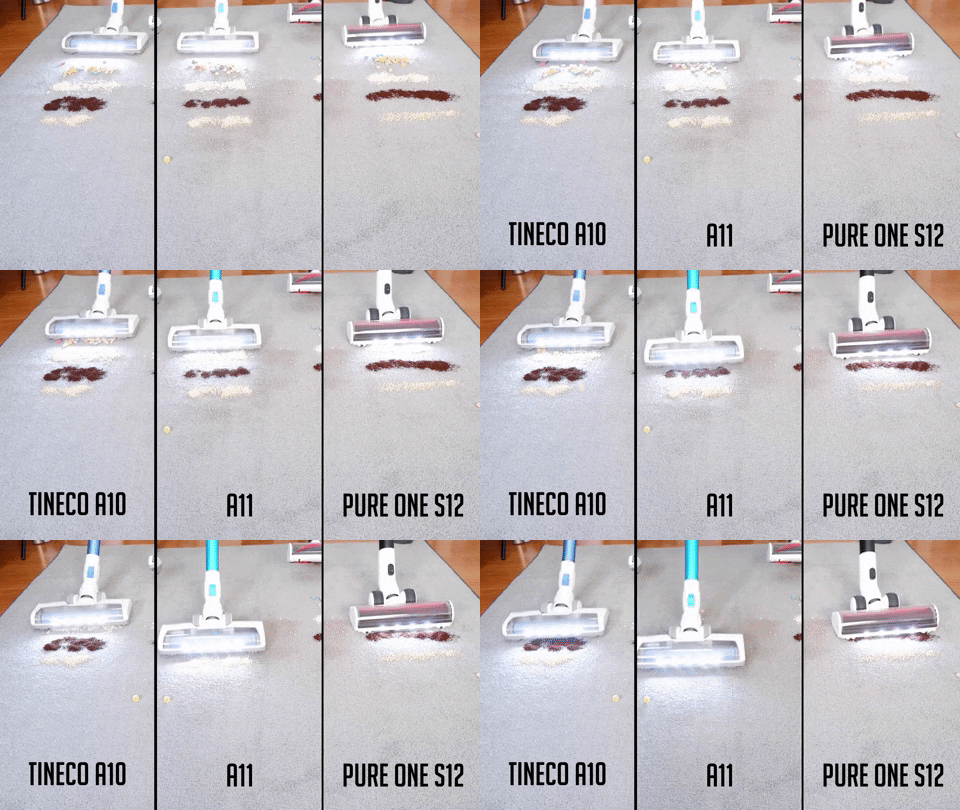
Overall, for surface cleaning tests, the Tineco A10 and A11 did better than their lower-end rivals, the Dyson V7 and V8. However, the V11 Torque Drive is the undisputed winner, overall factoring in the deep cleaning tests.
It was able to pick up 114% of sand on mid-pile carpets, which is the highest score so far. Even in the auto setting, the V11 scored higher than the S12 (99.97% vs. 98.3%).
The beauty of the V11 Torque Drive is its ability to deep clean for a duration of nearly 20 minutes (on the auto setting).
Tineco comes close with the S12, which features two batteries, but it doesn’t pick up as much.
Large debris comparison
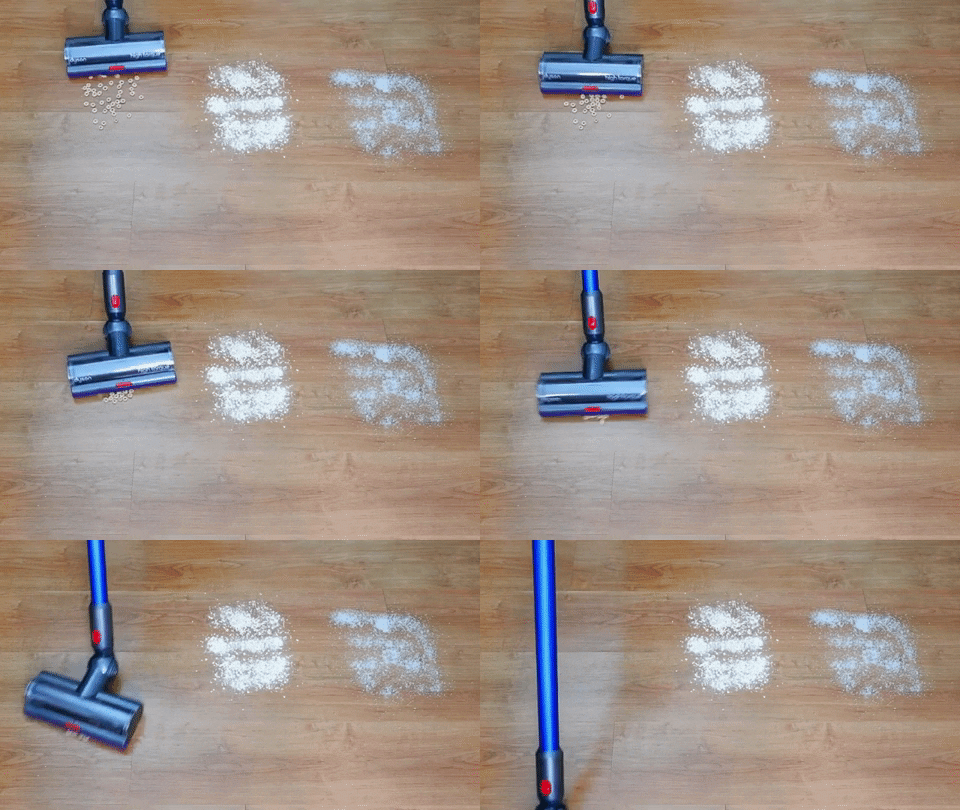
All the options have a soft roller to pick up large debris, such as Cheerios and Fruit Loops.
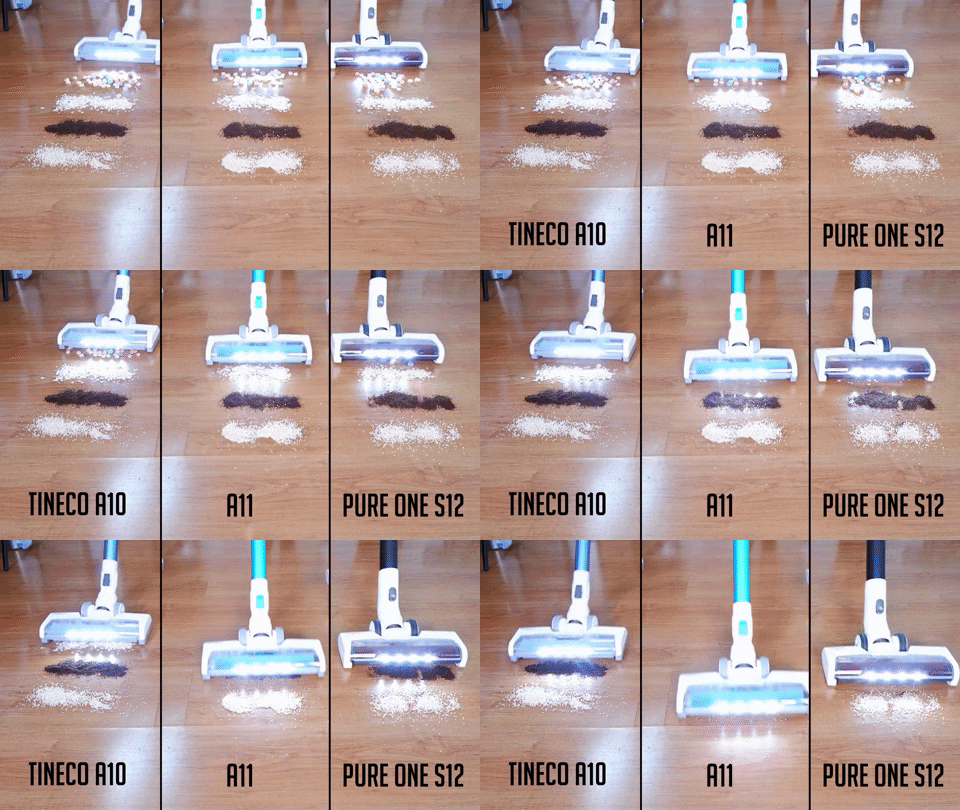
Of the seven options, only the V7 MotorHead cannot, since it doesn’t have the Fluffy tool. However, the V7 Absolute features this tool, making it an option for those who prefer something lighter than the V8.
The V10 and V11 Torque Drive attachments can clean Cheerios and Fruit Loops thanks to the adjustable gates. But you’ll have to zigzag it to coax the large items into the gates.
Hair wrap comparison
Dyson products did better with longer hair strands and hair pick-up on carpet.
Tineco products are decent, but the A10 and A11 options fall short of their counterparts in the categories I mentioned.
The Dyson V15 is the best overall choice for hard floors and carpets, thanks to its upgrades, particularly in the standard nozzle.

Almost nothing was wrapped on the brush roll, even with long 12-inch strands.
The V15’s soft roller doesn’t have any active anti-tangle system, but still did well.

Run time comparison
Next, we’ll examine the runtime of each vacuum. I performed all the tests using a non-powered tool with the main cleaning head attached separately.
Here are the results.
The Dyson V11 Torque Drive and Tineco Pure One S12 are the winners here, with the V11 running the furthest on a single battery, at just over 74 minutes.
The Tineco S12, with its two batteries, had the longest overall time at over 102 minutes.
Dust bin comparison
The V7, V8, V10, and V11 utilize Dyson’s hygienic system, making it easier to dispose of dirt without having to touch it.
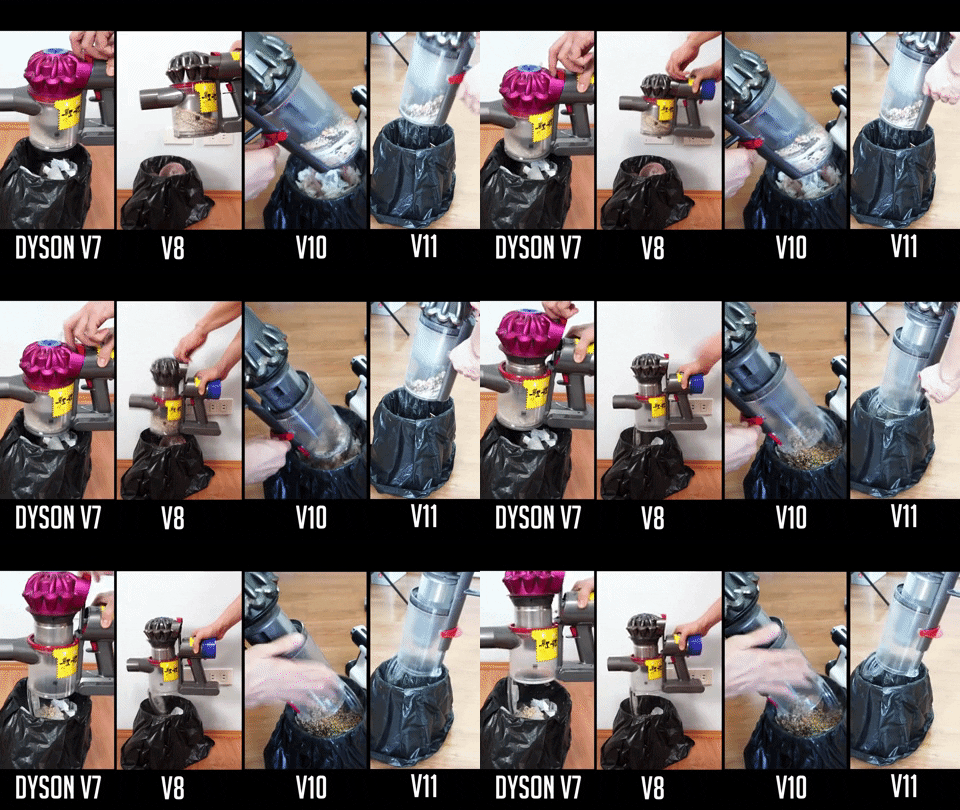
Tineco does not have this feature but only relies on a trap door. So, dirt is more likely to stick to the plastic parts.
Filter comparison
Tineco stick vacuums have two filters: a pre-motor filter and a post-motor filter located behind the motor.

Tineco S12 filters – post-motor (left) and pre-motor (right).
The A10 and A11 have the same setup.
Earlier generation Dyson vacuums – V6, V7, and V8, also have two filters – a pre- and post-motor HEPA. Some variants, such as the V7 MotorHead, lack the second filter, resulting in compromised filtration.

The Dyson V8 pre-motor and post-motor filter.
The newer Dyson stick vacuums, specifically the V10 and V11, feature only one filter behind the motor, but it’s a more substantial piece with a larger surface area.

Dyson V10 (left) and V11 (right) filter.
Noise Comparison
I used a sound meter to measure noise from a few feet away, and here are the results.
The noisiest options are the Dyson V10 and V11, nearing the 80-decibel mark. Not far behind are the Tineco A10 and A11, also surpassing the 75-decibel mark. Surprisingly, the Pure One S12 is the least noisy at just a little over 70 decibels.
Ergonomics comparison
Out of the seven vacuums featured here, I like the V7 MotorHead the best in terms of ergonomics, as it’s the lightest. It steers the best, effortlessly avoiding furniture.
The V8 is also good despite being slightly bulkier. While the V10 and V11 offer above-average maneuverability, their size makes it more tiring to use over long stretches.
But it still turns sharper than any of the Tineco products.
One weak point of Tineco vacuums is their steering. I like the smoothness, but it lacks feedback.
Even if you twist your wrist fully, it doesn’t turn as sharply as a Dyson. So it takes more turns to avoid furniture than a Dyson.
Maintenance comparison
These vacuums require regular maintenance to run smoothly. One of which is cleaning the filters. I noticed that Tineco filters clog at a faster rate than Dyson. So you’ll have to clean more often.
In a dirty environment, you have to clean it up twice a month. Dyson does a better job with its cyclonic filtration, allowing the filters to stay clean for longer. However, you’ll have to clean it once a month.
The HEPA filters of these vacuums are also washable. However, you’ll need to replace the Tineco filter annually.

In contrast, Dyson utilizes a “lifetime” filter, so technically, you don’t have to replace it as long as you clean it at the suggested intervals.
However, I’d still recommend buying extra filters to minimize downtime for both vacuums.
Tools comparison
I’ll share these photos of the tools that come with each of the Tineco and Dyson vacuums.
Dyson V7 MotorHead tools

- MotorHead
- Crevice tool
- Combination tool
- Extension wand
- Docking station
V8 Absolute tools

- Fluffy tool
- Direct drive tool
- Mini turbo brush
- Soft dusting brush
- Combination tool
- Crevice tool
- Docking station
- Extension wand
Dyson V10 Absolute tools

- Torque Drive
- Soft Roller
- Combination tool
- Crevice tool
- Mini soft dusting brush
- Mini turbo brush
- Extension wand
- Docking station
- Charger
V11 Torque Drive tools

- Mini turbo brush
- Soft dusting brush
- Crevice tool
- Combination tool
- Stubborn brush tool: It has stiffer bristles than the combination and the soft dusting brush, making it great for cleaning pet hair.
- Wand storage clip
- Docking station
Dyson V11 Outsize Tools

- Cleaning head
- Mini turbo brush
- Crevice tool
- Combination tool
- Upholstery tool
- Soft dusting brush
- Wand
- Wall mountable dock
- Charger
Dyson V15 Detect Tools

- High-torque cleaning head
- Slim roller attachment
- Wall mountable dock
- Extension tube
- Crevice tool
- Hair screw tool
- Wand clip
- Flexible extension hose
- Soft dusting brush
- Combination tool
- Charger
Tineco A10 Master tools

- LED Multi-tasker power brush
- LED Soft roller power brush
- Crevice tool
- Mini power brush
- 2-in-1 dusting brush
- Extension wand
- Storehouse
A11 Master+ tools

- LED Multi-tasker power brush
- LED Soft roller power brush
- Mini power brush
- Crevice tool
- 2-in-1 dusting brush
- Flexible long crevice tool
- Multi-angle adapter
- Flexible extension hose
- Dual charging powerhouse/dock
- Extra Li-ion battery
- Automatic pre-filter cleaning tool
- Soft dusting brush
- Extension wand
Pure One S12 tools

- Direct drive power LED brush
- An LED soft roller power brush
- Soft dusting brush
- 2-in-1 dusting brush
- Crevice tool
- Flexible long crevice tool
- Mini turbo brush
- Automatic pre-filter cleaning tool
- Dual-charging wall-mountable dock
- Extra Li-ion battery
- Flexible extension hose
- Multi-angle adapter
- Extension tube
The A11 and S12 have the most significant number of tools out of the box. It comes with specialty attachments, such as the flexible crevice and foldable adapter, which extend its reach into tight areas.
On the S12, the extension tube, combined with the flexible long crevice tool, will reach over 15 feet when fully extended. You can clean even high-ceiling homes without a ladder.
Other Tineco and Dyson comparisons
Where can I buy Dyson and Tineco products?
These vacuums are available in online stores like Amazon and Walmart. Please refer to the links below for the most up-to-date prices.
Dyson Products
Tineco Products
Disclaimer: I’ll earn a commission if you purchase through any of the links above but at no additional cost. So it’s a win-win for both of us!
Warranty Comparison
Dyson and Tineco cordless stick vacuums come with two-year warranties.
Which is better, Tineco vs. Dyson?
Both brands offer compelling features that make them excellent options. Choosing will boil down to your preferences and how much you’re willing to spend.
Tineco offers a large number of attachments. Its removable battery is easier to replace than the built-in ones in Dyson.
4 Reasons to consider buying a Tineco vacuum
- Less expensive: Tineco vacuums are more affordable than Dyson products and offer better value for the dollar spent.
- Additional attachments: You’ll receive more tools, which extend the reach for cleaning areas that are hard to access. Or cramped spots that a Dyson vacuum may struggle to clean.
- Removable batteries: All Tineco stick vacuums have detachable batteries that make them easy to replace.
- LED headlights: These lights enhance visibility, particularly when tracking dust under furniture.
- Trigger lock: Keeps the trigger in the “on” position, so you don’t have to squeeze it continually.
Dyson offers better polish with its products. These vacuums steer more easily, and the hygienic system makes it easier to dispose of dirt.
4 Reasons to consider buying a Dyson vacuum
- Better steering: Dyson products steer much better than any of the Tineco products. It’s more responsive and easier to move around.
- Great on carpets: The V11 Torque Drive is the vacuum I’d recommend if you’re looking for a cordless vacuum inside homes with lots of carpets.
- Larger dust capacity: This applies to the newer options like the V10, V11 Torque Drive, and Outsize that can hold more dirt.
- Easier to empty: The hygienic system makes disposing of dirt straightforward. There’s no need to pull the dirt out from the dust container.
The Verdict: Choosing One Will Depend on Your Preference
I’ve laid out all the reasons you should consider a Dyson or Tineco; choosing which will boil down to personal preferences.
Dyson offers a more polished product with better steering and a better-designed dust container. It’s easier to empty and better on carpet if you opt for the V11 or V15 variants.
Tineco is the less expensive option, offering more tools, a removable battery, and a trigger lock that is absent with Dyson.
In most of the tests, it cleans as well as a Dyson, so it provides more value for your dollar.
Regardless of which brand you select, you won’t go wrong with either. Make sure to make a checklist of what features you prioritize and make a decision from there.
